Showing posts with label obedience. Show all posts

Wednesday, April 8, 2015

My Dog Was Attacked

My clients have countless stories about off leash dogs coming after themselves or their pets. I’ve heard them and I’ve experienced it a few times myself. This past Monday I had a situation that I was completely unprepared to deal with and to be honest should never have happened.

I had been out of town for the long weekend and had some lovely family friends taking care of young Pointer. It was his first weekend as a solo dog and I was anxious to pick him up and see how he did. My friends don’t currently have a dog and did a great job of taking care him even though he had been slightly anxious without his pack around. When I pulled up into their driveway to pick him up I noticed a man with a large Rottweiler playing in the nearby children’s park. This violates bylaw in Calgary in that dogs are not permitted on or off leash in these areas. It is however a common occurrence so other than noting that they were there and seemed to be minding their own business I didn’t really think of it.


I loaded up my dog’s crate and belongings before returning to the house to get him. He wears a collar, gentle leader and leash. I made sure to put on his leash, as I didn’t want him getting overly excited and attempting to go visit the dog in the park. He’s usually pretty good about staying with me but why take an unnecessary risk.

I said goodbye to my friend and walked my dog the entire 12 feet from their front door to my Jeep parked right in their driveway. My dog was happy to go to the jeep and didn’t even notice the dog and man in the park. I had my back hatch open and he was ready to jump in when I saw the other dog running towards us across the street. The owner didn’t even attempt to call his dog. I could tell the approaching Rottweiler was coming in too fast to be friendly. I yelled him to attempt to deter him but he jumped on top of my top biting his head, neck, ear and even leg. My dog was secured by his leash and gentle leader and was unable to defend himself. I yelled and kicked at the other dog in an attempt to get him to back off. My friend came running from her home to assist but let’s face there’s not much too unarmed women can do against a dog this size and she was also pregnant. The man eventually made his way over and removed his dog. He never said a word to either of us. I checked over my dog. He was scared, bleeding from his ear and had puncture wounds and scratches along his head, neck and upper back. He also had a injury to his left front leg that I discovered the next day. I loaded my dog into my jeep and tracked down the man’s address once I saw which house he went into.

My dog is an intact male and other dogs before have attacked him. This generally happens in an off leash park setting and he’s showing discomfort before anything happens. He never instigates these events and continually the target of neutered males. This is however the first time my dog has been a significant distance away and not even looking at the other dog. This particular dog has very real dog aggression and his owner choose to run him off leash in a residential area where there are many neighbourhood dogs.


Now that some time has passed (a few days) and I’ve been thinking about this a lot. I’ve come to realize that I need to be prepared for an incident at all times. I do carry an air horn with me when I go for walks to help break up dogfights. When you work with aggressive dogs for a living you understand that sometimes accidents happen. We can’t always predict the behaviour of our own animals and definitely not someone else’s. In this situation it was not an accident and the other owner was fully in the wrong. He failed to have control of his animal and he placed his dog in a situation where everything could go wrong. My dog and I are going to suffer the consequences of this, as I’m fairly certain this has damaged my dog’s ability to trust and meet new dogs of this type. He took a full 24 hours to begin acting like himself again.

So why the blog post? For two reasons I want to educate the public on why we need to follow animal bylaws and also what to do when/if this happens to you or your dog.

We need to follow bylaws not because we’re at risk of being fined. It’s because the bylaws are designed to prevent aggression and allow dogs to live in a community in peace with each other and humans. Every single dog owner should be familiar with the bylaws in their area, which include leash laws, noise compliance and tethering. In Calgary, the leash laws are very specific and they are designed to keep everyone safe. Just because you feel your dog has strong obedience or is friendly doesn’t mean everyone else using the public spaces will feel safe around your dog. If I am walking my dog on leash it might be because he’s sick, not friendly or because I believe in following bylaws and my dog and I most likely don’t want to meet your dog while he’s off leash.

If your dog isn’t friendly with other dogs there are options for exercising, which include leash walking, hiking in remote areas on a long line and visiting a fenced area where you can safely run your dog and keep him/her away from others. Using a basket muzzle as a back up for safety would also make sense. It is your job to not put your dog in a situation where he/she feels they need to act aggressively towards other animals or people. If you can’t do this then you aren’t responsible enough to have a dog period.

If you have questions about responsible dog management and need help with behaviour modification for aggression please contact an appropriate dog trainer or behaviourist to help. Look for trainers who have their CPDT-KA, CBCC-KA or KPA certifications.

So what do you do when this happens? I can tell you from experience that these situations can occur quickly and you won’t always respond as well as you could. I definitely could have done a few things different when this dog came after mine. The first would be having my air horn on hand. I definitely did not think I needed it for 12 feet of walking but I did know the other dog was outdoors off leash and I could have had it just in case. I was only thinking about managing my dog and not that the other owner was not despite being shown evidence that he wasn’t following bylaw and therefore most likely wasn’t very responsible.  

I did a great job of not putting my hands in between two fighting dogs, which is crucial to human safety. I could have attempted to grab the other dog’s hind end. At the time this seemed far too dangerous but in hindsight may have been more effective than kicking. I could always have directed the other owner on what to do however I am not completely convinced that would have jolted him into action. But it wouldn’t have hurt to try.

And finally I need to ensure that I am taking my dog out for walks and reinforcing him heavily when we see another dog that is similar. He needs to know I will protect him and that he is fine so that my own dog does not develop reactivity or dog aggression. 

Monday, July 28, 2014

Dog Training: Like A Pro Seminar Series

Have you ever wondered how dog trainers can get their dogs to listen so easily? It’s a science and an art form. In this “Like A Pro” series Professional Dog Trainer Jade Robertson will demonstrate and walk you through how she would address each training strategy.


You can apply to have your own dog trained during the session or Jade will bring one of her own. The dog chosen to participate will not be proficient at the selected skill already so you will see exactly how to do it.  

The session is 30 minutes long with a 15-minute Q&A period afterwards.
Topics will include: loose leash walking, recall, stay and keeping focus in a high distraction environment.  


Spectator Spots: $10 per person per session
Apply to have your dog trained: $80 per dog/per session

Session Dates:
Saturday, August 16 at 11am
Saturday, September 13 at 11am
Saturday, October 11 at 11am
Saturday, November 8 at 11am


The location and topic will be selected 1 week in advance. All sessions will be held in Calgary, Alberta, Canada. 

Please email jade@wheresyoursit.com to participate. 


Tuesday, September 11, 2012

Why Obedience Training is Integral to Living with Any Dog

My clients literally come into all shapes and sizes. I’ve worked with dogs as small as 4lbs and as large 160lbs. They have varying backgrounds; some are feral dogs from reserves while others were luckier born to breeders who loved them and nurtured them.

The size or breed or even to some degree background doesn’t matter as much as one crucial component that the owner of the dog can control. When I’m addressing a behaviour concern such as aggression, resource guarding or impulse control concerns (such as jumping up or stealing food) it is quicker and easier to “fix” the issues with dogs who have attended some sort of obedience class as a puppy.
Why is this?
Simply put because the dog was socialized to work around distractions (to varying degrees of proficiency) and the owner has a relationship with their dog that includes listening to commands (even if it’s just sit). Dogs who have had no formal training and happen to have an owner who hasn’t taught them much take a lot longer to work with.
So have a new puppy? Time to get to class. Not only are you less likely to have serious behaviour problems down the road but if they do happen it will be easier to address saving you money, stress and time in the long run.
It’s also important to remember that not all obedience classes are created equal. Puppies need to trained using positive reinforcement techniques not coercive or punishment based (no choke chains, no prong collars, no shock collars, no leash corrections using a karate chop or any other sort of hard yank, no hanging in the air, etc). Some of these classes are labeled as positive or balanced training. Puppies specifically should not be trained using harsh corrective methods and even in the “good old days” these methods were not used on dogs under 6 months.
So how do you find a good class? Well there’s a few signs of a great puppy class. You’ll want a trainer who has experience (ask where and if you do not understand the answer look it up as some dog training schools aren’t so good), has certification (CPDT-KA is a good start – that being said there are good trainers out there who do not have certification), use food when training, encourage people to come watch their classes before signing up, and can provide references. Be choosey and don’t settle on someone you don’t like. A good trainer/client relationship can help you keep small problems small throughout your dog’s life.

Wednesday, July 18, 2012

Teaching an Old Dog New Tricks

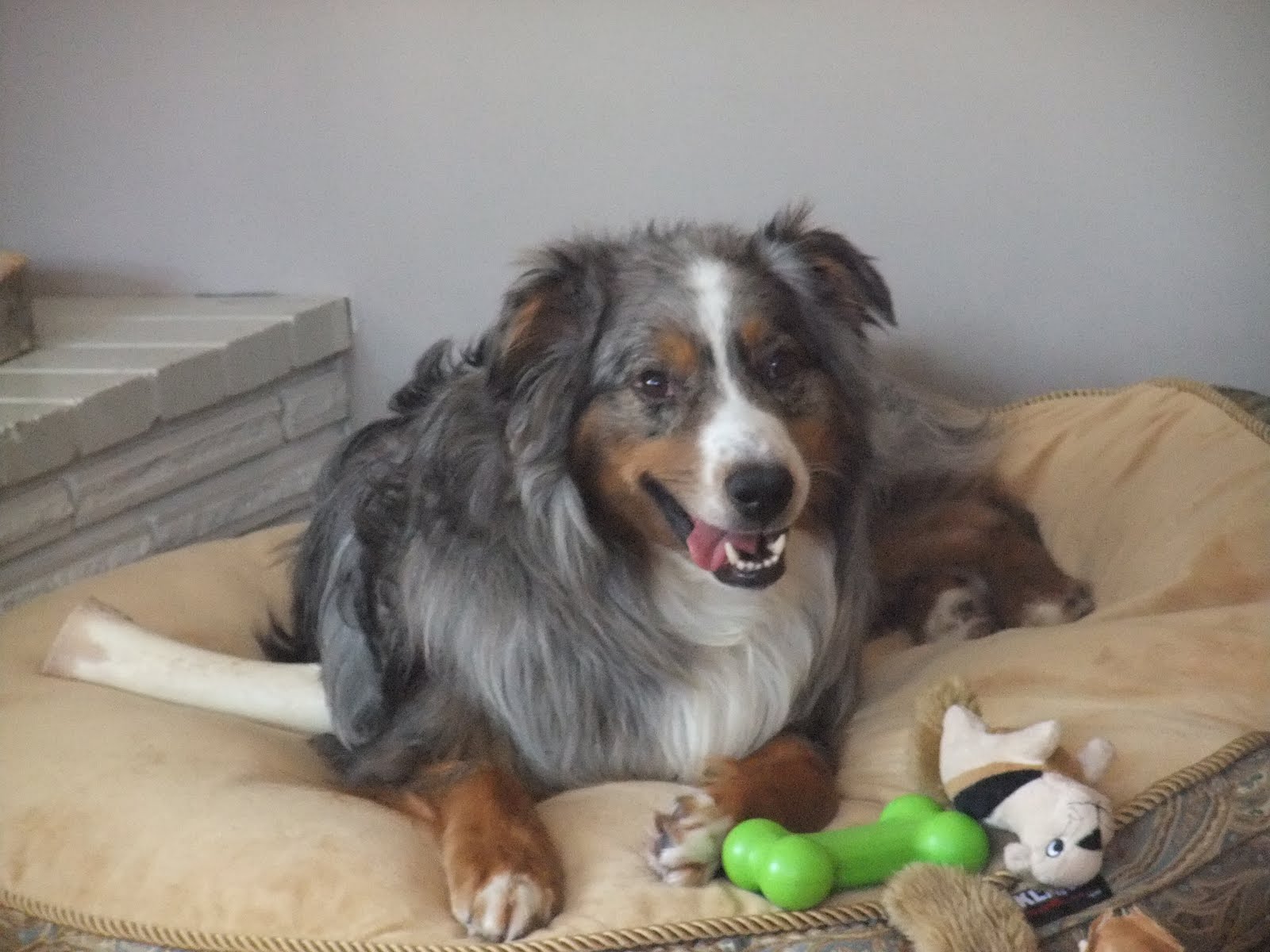
Marco my 2.5 year old Australian Shepherd is not a natural toy dog. In fact I had to teach him out to pick up a ball, chase it and bring it back all separately. This even took a few weeks. Since then however he is ball crazy which is a good thing. I routinely use his ball as a reward when we’re practicing obedience or agility.
During the spring the idea of playing Frisbee with Marco came up and I thought it’d be easy. I’d throw a Frisbee, he’d catch it and bring it back. It isn’t even so different from playing fetch with a ball. Well I was wrong!
I soon discovered that not only could I not throw a Frisbee like I had pictured in my imagination but Marco didn’t know how to chase or catch it either! Luckily I’m not easily deterred so we got to work.
The first thing I had to learn to do was throw a Frisbee. So I practiced that sans-dog. It’s still a work in progress and my partner is infinitely better at it then me so at least Marco has a throwing partner.
The next step was teaching Marco how to grab a Frisbee. He tried several different tactics including hitting it with his muzzle, watching it crash and then pouncing on it and getting hit in the teeth a bunch. So we practice with me just holding the Frisbee about a foot above his head and getting him to jump up and take it from my hand. He learned how to put it in his mouth. We also tried a few different Frisbee types including the chuck-it flying squirrel which was great when we started since it was soft.
Once we had that out of the way I changed the height distance and also taught some short throws (1-2 feet away). He caught onto to that and it’s still part of our warm up today. I also use this game at shows to help pump him up before going into the ring. He’s an Aussie and they love to bounce (think Disney’s Tigger).
From there I started putting him in a sit about 7-10 feet away so he was under where the Frisbee would fly and wouldn’t have to coordinate running and jumping. This allowed him to practice watching the Frisbee and perfecting his leap into the air for a good catch.
So now it was time to add the running element. Not so easy! After watching a number of You Tube videos on Disc Dog and their distance event it was clear that Marco would need to do a right finish to get acceleration before the throw took off. Luckily Marco has a right finish or a “go around” for obedience and rally so it wasn’t a new skill. We did have to speed it up though.
From a “front” position Marco is cued to go around. As he runs behind the thrower he picks up speed. By the time the Frisbee starts its flight he’s at full speed and right under it. Marco can now do distance catches with all 4 paws off the ground. He’s getting really good and catches more than he misses.
I’ve also learned that playing Frisbee is tiring! More so than ball, tug, agility or just plain running around with other dogs. Marco can do about 10 throws at full speed before he’s ready to take it easy. We keep the sessions short so they’re exciting and interchange it with other games. It’s good exercise, great bonding and cool to watch.
The moral of the story? Even playing a simple game of Frisbee can take time to train. Please don’t expect your dog to inherently know how to pee outside, walk on leash, come when called and other tough skills without training. Training takes time, patience and above all else problem solving. If something isn’t working break it into smaller steps and give your dog a fighting chance. Also train “fun” things so you can hone your own skills and play with your dog.
Dogs with fear and aggression issues have shown massive improvement when their owners teach them tricks and play with them. It increases confidence and focus. I highly encourage every dog owner to train their dog to do something new several times per year.

Monday, September 26, 2011

5 Tricks to Teach Any Dog

Not everyone wants a perfectly obedient companion but all dogs need certain essential skills to keep them and the people around them safe. Here's my suggestions for "must haves" in doggy skills:

#5 - Leave It

The all important skill of relinquishing objects or food (or anything else a dog might want to grab). This will help prevent bites, ruined possessions and keep your dog safe from consuming dangerous items left lying around. Luckily leave it as an easy skill to teach and most dogs are quite happy to trade! 

#4 - Stay

Essential for doorways, greeting visitors, a moment when you have to drop your leash, going up and down stairs. Really there's no limit to what stay can do for you. A good, full proofed stay is absolute must have for many dogs and owners. Stay takes some time and effort to teach but is well worth your while. 

#3 - Walking On Leash

A dog that walks well on leash is a dog that gets lots of walks and socialization. Walks are a crucial part of keeping both a dog and owner happy. Teaching your dog not to pull you down the street is something every dog walker can apperciate. 

#2 - Quick Down or Drop command

Having a cue word that immediately stops your dog while running or jumping can help de-escalte any situation where your dog is over excited. This one needs to be taught in small steps. 

#1 - Coming When Called

To me this is the number one skill ANY dog needs. It can be a lifesaver! 

Thursday, September 8, 2011

How Obedience Skills Are Used During Everyday Walks...


Last night I took the crew out for a run around 9pm. We chose a long stretch of grass that allows the dogs to really run and play. The grass is directly beside a road that sees moderate traffic although it was late at night. Our neighbourhood also includes rabbits, cats and the occassional coyote. 

Here's where obedience skills made our walk safe and fun. We saw a cat right after leaving the front door. A simple "watch" cue told my dogs that they should be focused on me instead. We used our loose leash walking skills to make it over to the grass and as a result I wasn't pulled or hauled around. 

Before taking the dogs off leash they were asked for a sit stay. This gives me to do a once over of the area before giving them freedom. It also gives me a chance to practice sit stay (with a real life reward of play for completing the task). 

Once off leash we needed to use "recall" aka "come" a few times when the Aussies went too far. Remember it's dark out so I wanted to make sure I could always see them. They also discovered various pieces of garbage that I didn't need to touch since they all know "leave it" means forever. 

Occassionally when I saw headlights coming it was time for everyone to offer a down stay. This keeps my dogs safely near me and away from traffic. If I had had a beginner dog with me it would have been the perfect chance to practice leash on (and then showing the dog that they can be unleashed again once the car is past which makes putting on the leash a non-issue).  My dogs are taught to hold stay until I release them verbally with an "all done".

The entire walk took about 30-40 minutes. They practiced almost all their basic obedience commands. We didn't use any additional reinforcers (aka food, toys, etc) because I had the best reward available (running free and playing with each other). Remember that obedience is a way of life and not just a class you take when your dog is young. Practice all the time and incorporate it into any activity you do with your dog. Make playing "obedience" the best game and you'll have a dog that can listen anywhere.

Thursday, April 14, 2011

What's Rally Obedience?

Marco and I have entered our first Rally Obedience Trial this weekend. It takes place at Hyper Hounds Dog Training (Okotoks, AB) and runs on both Saturday and Sunday.


Many of my students have asked what is Rally Obedience? And then why I should consider doing it with me dog?

Rally Obedience (often referred to as Rally O) is a relatively new sport for dogs. It has been around for about 10 years now. The sport was developed by the Association of Pet Dog Trainers and has spread to other organizations including AKC, CKC and CARO (Canadian Association of Rally Obedience).  The sport is a mix of formal obedience moves (heeling, turns, sits, downs, stays, etc.) but uses the fun of agility by creating courses. There are about 20 signs on a course that an owner and dog need to complete. Dogs of all breeds and ages may take part.

Now why should you consider taking a Rally O class with your dog?
Simply put it's a fun way to learn obedience skills that you need. The most critical skill is heeling and rally participants spend a lot of time working on that. You'll also develop quicker response to commands, enhance your bond with your dog and learn to tackle distractions. It's also a great start before taking on an agility class.

Also in CARO and APDT trials owners are allowed to use food rewards on course. This makes it a great place to get dog some ring experience and learn to build up focus. 

So come out and watch the trial this weekend. If you have questions please let me know.

Tuesday, December 21, 2010

How To Use Your "Leave It" Cue

So many dog owners are now choosing to attend a basic dog training class. They learn skills like sit, down, stay, heel, leave it and recall. Or at least they sort of learn these skills depending on how much they practice. What I have noticed is that even though dogs and their families are learning these cues they aren't sure how or when to use them. 

Let's discuss the important Leave It or Mine cue. This means that you've asked your dog to not touch and back off an object such as a treat, toy or person. Many dogs get really good at this as a party trick. I can easily line up treats on my dogs' legs as they look away waiting for a chance to earn one. However Leave It as many real world applications that could help you out. 


Here's some examples:

Situation #1
I'm walking my dog down the street and we have to pass another owner and dog. My dog starts to get excited, pull and even bark! I can ask my dog to leave it, focus on me and then heel on or leave it, focus on me and do a sit stay as they pass. So much better than yelling at my dog, yanking on the leash or allowing him to pull me over. 

Situation #2
I'm cooking some hamburgers for dinner and one falls off the plate! All four of my dogs do a mad scramble to grab these delectable entry. A good leave it means they all back off and I get my burger back.

Situation #3
My young puppy has grabbed a boot and is playing keep away. He thinks he's being so cute with it. I know that if I chase him he'll never give it up. So instead I ask him to leave it and then call him to me. The boot is left behind, forgotten until I put it away where he can't get it. 

Situation #4
I'm at the dog park and of course one of my dogs finds a dead duck sitting near the river. Well I definitely don't want to grab that out of his mouth nor do I want one of my other dogs to dart in and start a tug of war. I ask them to leave it and the finder dog promptly drops the duck and all dogs follow me away from it. I didn't even get my hands dirty and no one ate it. 

Situation #5
It's winter and one of the dogs is in the yard eating poop... yes it happens and the jury is still out why they do it. I don't care why right now; I want him to stop it. So I open the door yell out leave it and he drops the yucky stuff. 

And there's more you can do with leave it! It's one handy cue word. Leave it can be applied to anything you don't want your dogs to have (objects, people, dogs, garbage, rocks, etc). It can also stop dog fights in the home... for example if one of your dogs is guarding a toy or bone and it is about to trigger a battle. I can easily claim the object by saying leave it and removing it. It saves a lot of trouble! 

Remember that if you have a dog that guards things like bones, food or toys you will need to contact a professional trainer or behaviourist to help you. It's very important to understand dog body language when dealing a potentially threatened pet. We don't want to push our dogs to guard or bite us. There's many ways to use desensitization to change that situation around over time. 

Contact Where's Your Sit if you want more information on leave it or resource guarding issues. We would be more than happy to help!

Saturday, October 16, 2010

Cleaning Up Your Cues

 "Charles, Charles, Charles" this still gets a laugh in my house. One day my family and I were enjoying a walk at River Park off leash area when this lady started to call her little Bichon mix to come. She must have said "Charles" over a hundred times with no response from her very cute fluff ball. He never did come and she resorted eventually to following him around and continued to call "Charles, Charles, Charles" in a very nasally voice. 
The point of this little story? When humans are frustrated we tend to repeat ourselves. This happens all the time. We tend to change the tone of what we've said but generally not even the words themselves. This can be blatantly obvious when someone is speaking to another person from a different language background. The same thing goes for dogs. If they aren't responding the first time it could be because: 
  • Rover is distracted 
  • Rover doesn't understand the cue word 
  • Rover doesn't care about the cue word

Now what? Well it's time to clean up your cues. When training begin with using a consistent training cue. Sit = Sit, Down = Down, Name = Look at me, Come = Come to me all the way and let me catch you, etc. Don't say down, lie down, lay down and use down when you mean off. This confuses your dog. 

Only say your cue word 1 time when you are asking for a behaviour and then wait. So if I'm practicing sit at the curb I will state "sit", wait 10 seconds, add my hand signal and then simply wait for compliance. By not repeating myself I am making that cue word matter. It's not being lost in all that chatter that humans are so often associated with. 

It's also important to ask yourself if your dog was ready to listen and demonstrate obedience skills in the environment you're in. If you've only ever practiced down indoors then maybe asking him to do it at the busy dog park is going to be too hard. Take things in steps and remember just because you taught a cue in one situation doesn't mean your dog will understand what it means somewhere else. Be a fair leader. 

The other issue can be that we've already diluted or poisoned a cue word so the dog doesn't care about it anymore or worse has a negative association with it. This can be seen commonly with rescue dogs or dogs who have had a harsh training background. Suddenly "come" means I'm going to yell, scruff and roll you. That's a poisoned cue. When I get a new dog I'll often use a different recall word than "come". Some good options include "here", "hurry", "hustle", "let's go", etc. It doesn't matter what the word means in English as long as your dog thinks it means "BEST PARTY EVER". 

Remember to use your cue words sparingly, associate them with positive rewards and make sure you have compliance when you ask your dog for something by setting him/her up for success. Dogs don't speak English (or any other human language) so we need to go slow, be clear and mean what we say.

Thursday, October 7, 2010

More Pets Than People...

Managing a multi-pet home can be challenging and I can definitely relate. I share my home with at minimum 3 dogs at a time and generally we will have an extra dog and one or two cats hanging around too. Here's some practical tips on how to live in harmony when the pets outnumber the people... 

The most important first step is making each and every single dog has attended at least 1 obedience class. This allows you to bond one on one with your dog without the other pets competing for attention. It also allows you to create a basic foundation of training with your pet. All dogs should learn their name, sit, down, stay, how to walk on leash and recall. A good obedience class will give you those foundation skills in a rather short order. 

It's also important to realize that training is a lifelong process for dogs. My own dogs attend classes regularly to enhance our bond, practice new skills in a distracting setting and to enjoy dog sports. If you're not a training addict like me that's alright but remember you will still need to spend time polishing your basic skills with each dog individually. 

Karen London, PhD and Patricia McConnell, PhD also recommend giving your dogs a "group" name. This allows you to address your dogs all at once if need be. This comes in handy when you're at the park and need everyone to come at once. It can also be helpful when your dogs start to misbehave and you want their attention. A group name can be something as simple as "puppies" or "kids". I use "aussies" to address my boys. Heidi is rarely in on the action with them and generally just needs her individual name. 

Remember when dealing with a home with dogs of a different breeds, ages, sizes, genders that the rules for one dog might not be the same for another. That's alright! My pint size Schnauzer is definitely allowed to do things that my 60lb Aussies are not.  My puppy also has different rules than my trustworthy adult dogs and that's alright too. He'll have his chance to earn the same privileges. My puppy tends to get more training time and exercise time to make up for his extra rules. Life isn't always fair and that's alright! 

If you're experiencing any aggression type issue with multiple dogs in the house make sure to contact a qualified positive reinforcement trainer to give you some guidance. 


Wednesday, September 29, 2010

How To Get Your Dog To Behave At The Dog Park

I can't begin to count the amount of times I've seen well meaning dog owners take their best friend to the off leash park only to leave in anger when their fun loving pooch doesn't listen. A trip to the dog park takes prep work with obedience skills and requires a great deal of control without a leash.

One of the many reasons positive training is a great choice for pet owners is because the focus is teaching your dog to listen without any contact! I don't have to correct my dogs with a snap of the leash to get them to sit, down, stay, come, etc so when their leashes are off I still have the same control. 
Nothing will replace taking working directly with a trainer to get your dog off leash ready but here's a few tips to help out the wonderful dog owners who want to give their dogs freedom and some play time. 

Teach your recall word on leash to start:  practice calling your dog clearly in the house. "Rover come" or "Rover here" and reward with an awesome treat. Back up a few steps and start again. What you're doing is building a positive association with your recall word. You need to start in a place with no distractions and practice over and over. Do not repeat your word. If your dog doesn't come try running backwards, clapping your hands or squeaking a toy. The idea is to teach your dog to come when you say the word the first time. 

Up the Ante: Grab a leash or long line (a piece of rope about 20 feet long with a secure clip) and head out to a small, non-busy park. Practice your recall word and make it fun. Use toys, great treats and lots of praise. Slowly incorporate practice sessions to busier and busier locales. 

Ready for Off Leash? Try off leash practice in a small, fenced park to start. Baseball diamonds work well! Also invite your friends to come and practice with their dogs to add distractions. Once you have a dog that is responding quickly and reliably try taking your dog to the dog park. Time your recall for moments when you know he/she will be successful. If your dog is ignoring snap the leash on and head home. 

Key tips for long term success:
1. Always ensure that recall is something fun for your dog and reward it!
2. Never call your dog when the fun is over (aka only calling when you leave the park or for bath time, etc)
3. Bring tasty treats with you but also incorporate toys and games so your dog learns that you are also fun
4. Don't forget to keep practicing, this skill is too important to not keep fresh and reliable

Tuesday, September 28, 2010

The True Value of Obedience Skills


I've always thought of obedience training as crucial to having a polite, well mannered family dog. As a dog sports competitor obedience is also a set of skills that dogs need to master to a very specific criteria. This month however, obedience skills had another use in my home.

Tank, my 4 year old Australian Shepherd has been suffering from a slight tear in his cruciate ligament. After months of osteopathy and kennel rest it became apparent that he needed surgery to recovery from this injury. After several weeks of preparation (DAP, setting up "stations" around the house for him and getting rid of some excess weight) Tank was ready for his big day. He came through the surgery without cause for concern but we still had an arduous journey ahead of us.

Our wonderful vet, Dr.Barlow from Okotoks Animal Clinic told us bluntly from that start that he was responsible for 30% of the success but the other 70% comes from rest, physio and proper management of his recovery. Tank began 3 months of kennel rest with limited exercise and no contact with our 2 other dogs.

Limited exercise meant that Tank needed to spend his days in an exercise pen or kennel. Thanks to kennel training throughout his life he was able to adjust to this without pause. He has always associated his kennel and pen with a nice bed, good toys and wonderful treats. It also meant that on Tank's short 3 to 5 minute walks he needed to be under control. Of course a formal heel comes into play here. This high energy, happy go lucky dog was no longer getting off leash time so he was a bundle of excitement on walks. We used the formal heel to keep focus on the handler, ignore distractions such as other dogs, squirrels and rabbits as well as to keep him from putting excess pressure on his healing knee.

The work didn't stop there. Tank gets regular cuddle sessions throughout the day to ease his mind and of course keep him happy. The dog can't get enough love to save his life! So Tank began to get "special" treatment. He was allowed to have one on one time on the couch or the bed while I enjoyed a book or tv show. This meant that Tank needed a stay so that he wouldn't jump off the furniture and injure himself. This stay included distractions such as family members coming home, doorbells and strange noises. Luckily Tank has long ago mastered the stay and could safely hang out on the couch or bed without cause for concern.

Never doubt the benefits of obedience training. You never know when you will need these skills in real life. Tank's handle-ability also allowed for x-rays to be taken without him having to be sedated. There are numerous uses for obedience and I can't imagine going through this surgery and recovery without these skills.